Nuclear Tests & Detonations
28 sites were used for nuclear weapons detonations between 1945 and 1992.
Total tests since 1942
- 1,054 Detonations
At a glance
1,054 unique tests and detonations were conducted by the United States at 28 locations. The first nuclear bomb, code-named Trinity, was detonated in the New Mexico desert on July 16, 1945, as part of the Manhattan Project, led by J. Robert Oppenheimer. This was the first of hundreds of aboveground nuclear tests, which would only end in 1963 when President John F. Kennedy signed the Partial Test Ban Treaty, outlawing nuclear weapons tests in the atmosphere, in outer space, and underwater. This still left room for underground nuclear weapons testing in the United States, which would continue until the 1992 US testing moratorium.
Why you should care
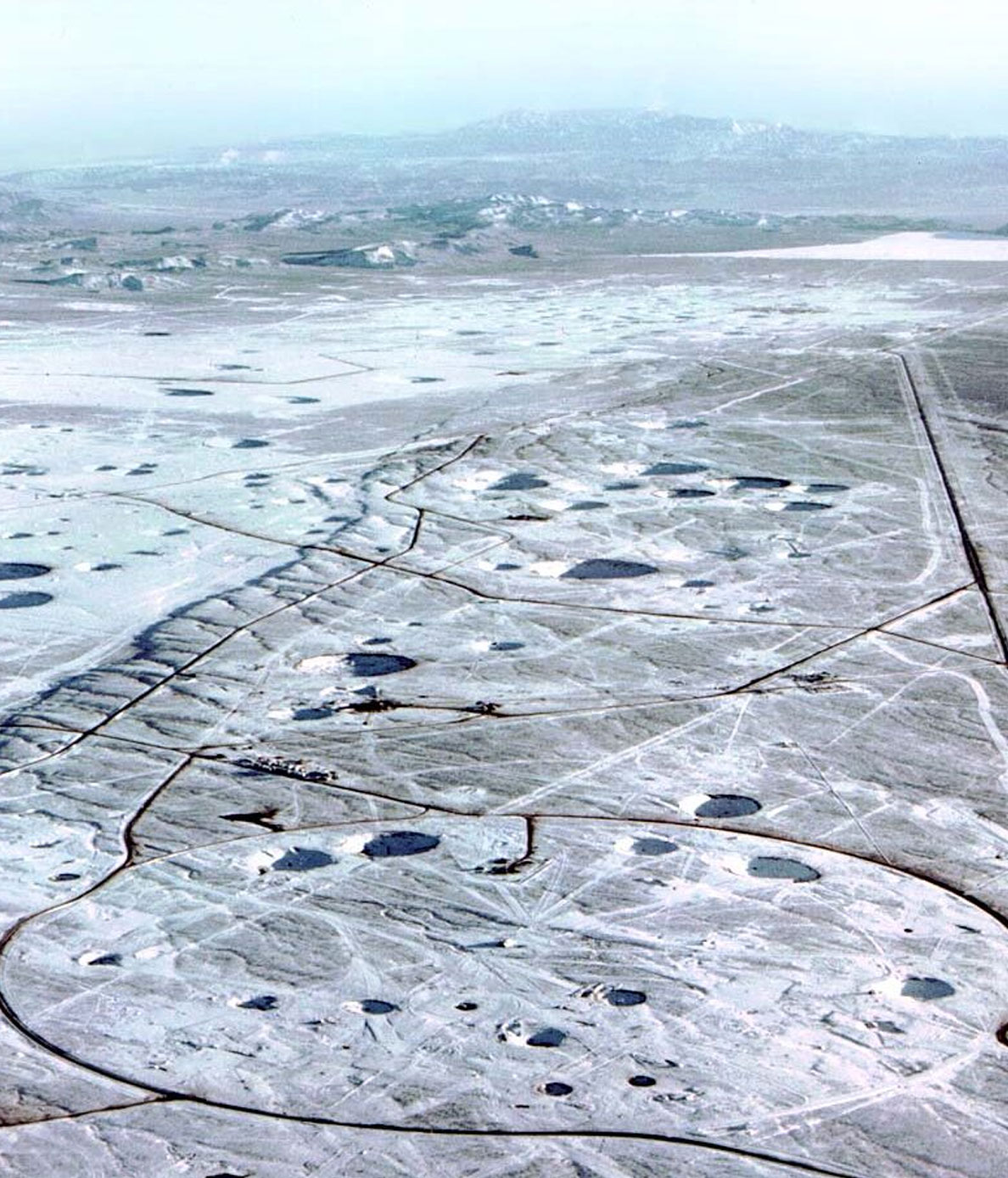
The United States conducted 215 atmospheric and underwater nuclear tests in all from 1945 to 1963, mostly in the Western United States and the Marshall Islands. An additional 839 underground tests were conducted at the Nevada Test Site, near Las Vegas, between 1963 and 1992.
At the Nevada Test Site, the local chamber of commerce went as far as to print calendars to advertise detonation times and the best spots to watch them from. But the government failed to tell the public that being so close to repeated nuclear detonations was unsafe and posed a risk to their health. Communities downwind of the explosion, workers at the site, and visitors and onlookers were often exposed to radioactive fallout with the potential to increase their risks of cancer and other radiation-linked illnesses.
Being farther from the test site wasn’t necessarily safe either. Research has shown that radioactive fallout from the New Mexico and Nevada tests traveled through the jet stream as far as upstate New York (click here to download ArcGIS files of nuclear testing fallout). Ultimately, the Cold War was never truly cold: The United States was bombing and poisoning its own residents the whole time.
In addition, US nuclear testing in the Marshall Islands caused significant health, environmental, and cultural harms to the Marshallese people. It displaced large populations, destroyed entire islands and made others uninhabitable, and led to radioactive fallout and contamination across the country. The Marshallese government and many in the community maintain that the United States has yet to address the full scope of injustices suffered by the Marshallese people.