Military Bases
Bases involved in various aspects of nuclear weapons storage, deployment, and maintenance.
Total sites since 1942
- 62 Sites
At a glance
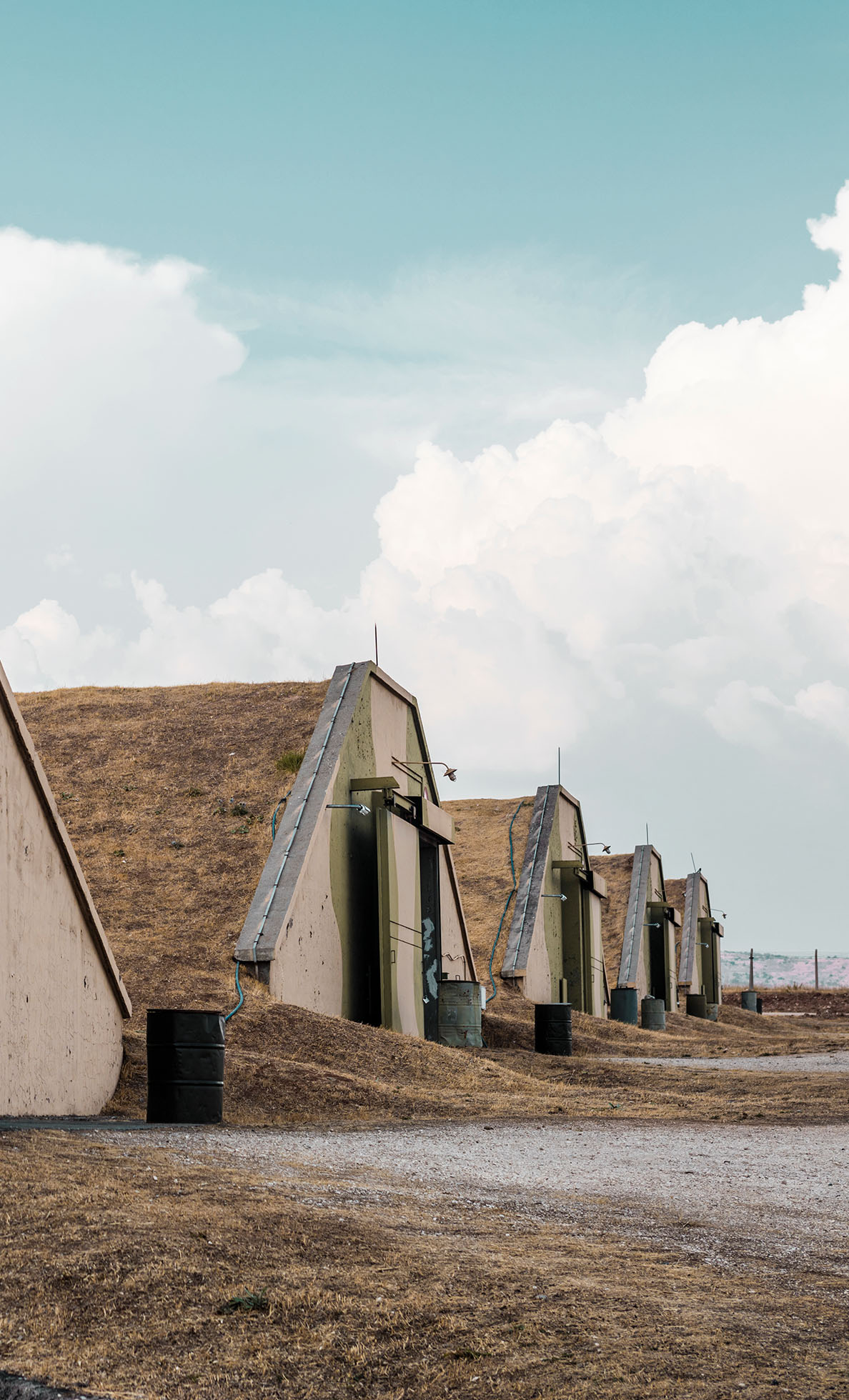
Many nuclear weapons are deployed at military bases, where they are held for storage and maintenance in support of possible military use. In the United States, this deployment occurs in three different forms: via land-based nuclear-armed missiles, submarines, and aircraft, known collectively as the nuclear triad. Land-based nuclear-armed missiles, held in silos, stand ready to launch by presidential order 24/7/365 within a matter of minutes. In the event of an attack (or an apparent one), the president has only moments to decide whether or not to launch nuclear weapons in retaliation, and once they have been deployed they cannot be recalled.
Why you should care
All military nuclear bases are potential targets in the event of a nuclear conflict—in fact, they are referred to as “nuclear sponges” because they are the locations designed to absorb an initial nuclear attack on the United States. Because these nuclear weapons are meant to either “soak up” a nuclear attack by an opposing force or be launched in retaliation to a nuclear threat, there is an associated “use it or lose it” mentality that adds to the pressure over whether or not to launch them during a crisis. There have been numerous close calls in the past when accidents have led sensors to detect threats that were not real, and it was only through situational luck that the nuclear weapons were not launched.
The current US intercontinental ballistic missile (ICBM) force consists of Minuteman III missiles in silos around the Francis E. Warren Air Force Base in Wyoming, Colorado, and Nebraska; Malmstrom Air Force Base in Montana; and Minot Air Force Base in North Dakota. If the United States chose to launch a pre-emptive nuclear strike, Russia and China, which have thousands and hundreds of nuclear weapons respectively, would almost certainly retaliate, placing millions of community and service members throughout these five states at risk of being sacrificed by the US government. The loss of life and environmental devastation this would entail is unconscionable. Click here to learn more about who would be at risk if US ICBM silos were attacked.