History of Nuclear Weapons in the United States
Below are some of the major moments in US nuclear history, from research to buildup and use.
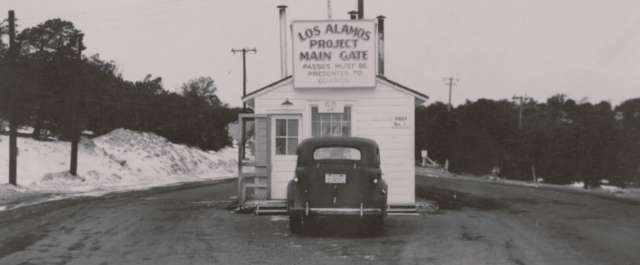
August 1942 -
Manhattan Project
The United States secretly begins pursuing the creation of nuclear weapons through a research and development program under this codename.
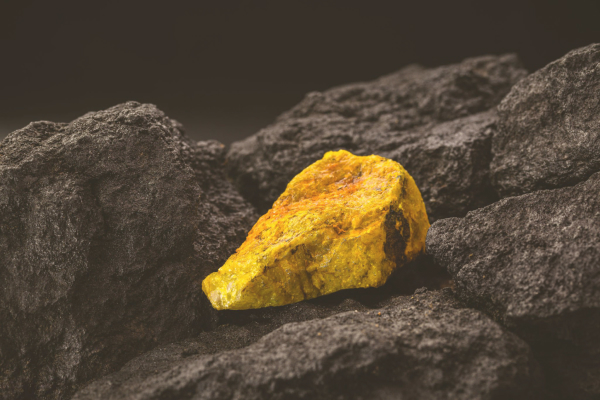
1942 - Uranium Import
The United States begins purchasing and importing uranium from the Belgian Congo for the Manhattan Project.
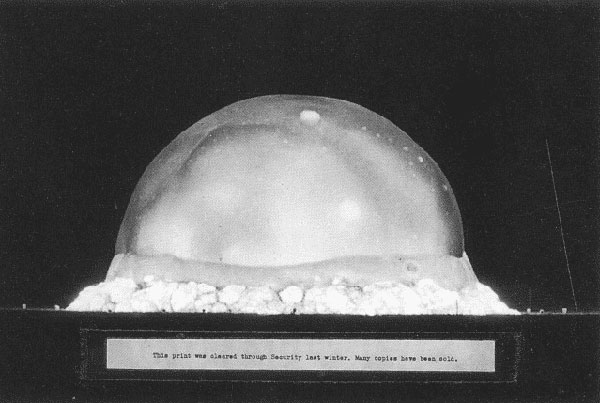
July 16, 1945 - Trinity Test
The first nuclear weapons test is conducted at the White Sands Missile Range in New Mexico. The U.S. government lies to people living in the vicinity about the nature of the test, and does not evacuate or monitore people for health issues. Read more about the Trinity Test here.
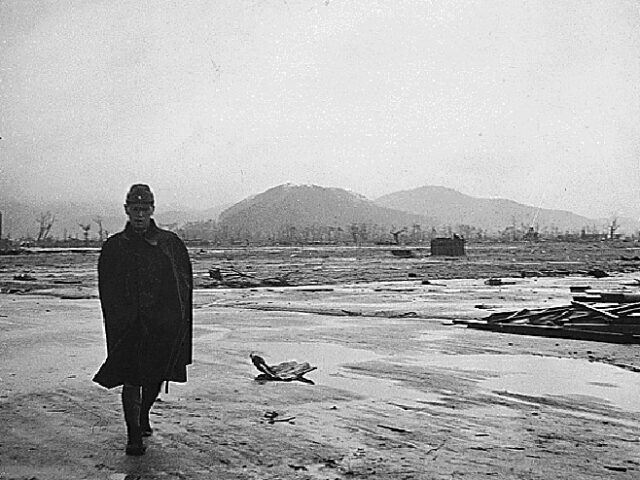
August 6, 1945 - Bombing of Hiroshima
The United States detonates an enriched-uranium bomb over the Japanese city of Hiroshima. An estimated 140,000 people will die in the explosion and from radiation exposure by the end of 1945. More will continue to die from radiation-related illnesses over the ensuing years and decades.
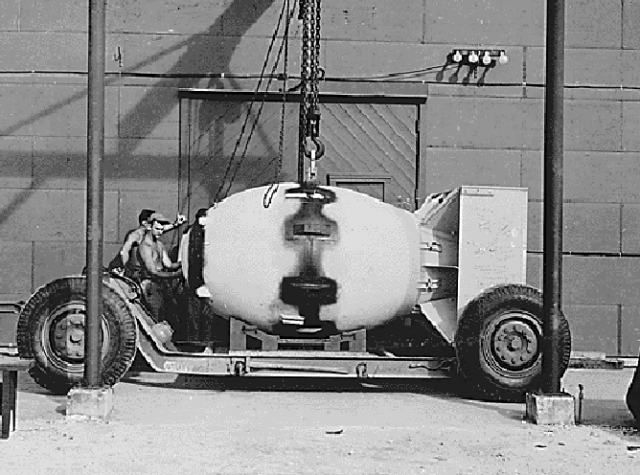
August 9, 1945 - Bombing of Nagasaki
The United States detonates a plutonium bomb over the Japanese city of Nagasaki. An estimated 74,000 people will die in the explosion and from radiation exposure by the end of 1945. More will continue to die from radiation-related illnesses over the ensuing years and decades.
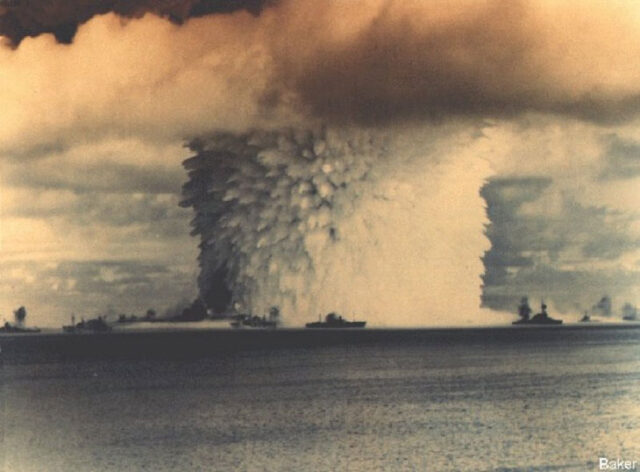
July 1, 1946 - Nuclear Bomb Testing in the Marshall Islands
The United States begins testing nuclear weapons in the Marshall Islands in the western Pacific, which will continue until 1958. During this time, the U.S. conducts 67 aboveground tests, an equivalent explosive yield to detonating 1.7 Hiroshima-size bombs every single day. Read more about testing at Bikini Atoll here.
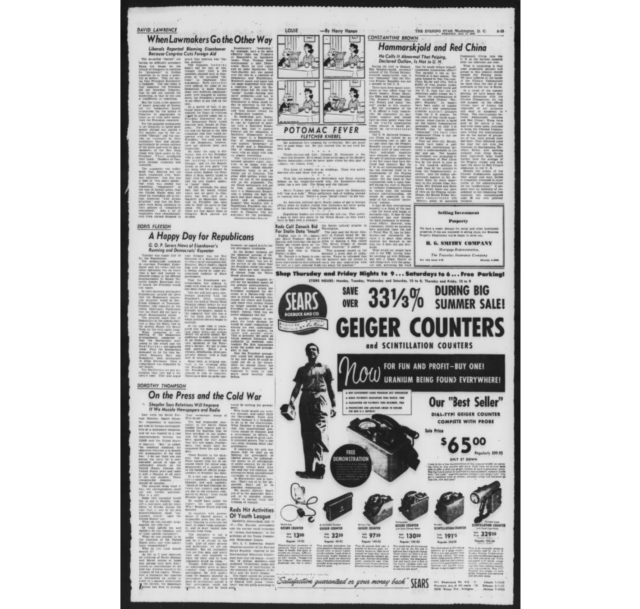
1947 - US Uranium Mining Increases
The US Atomic Energy Commission begins a program to promote and purchase uranium mined in the United States, leading to a dramatic expansion of both the number and output of uranium mines across the country.
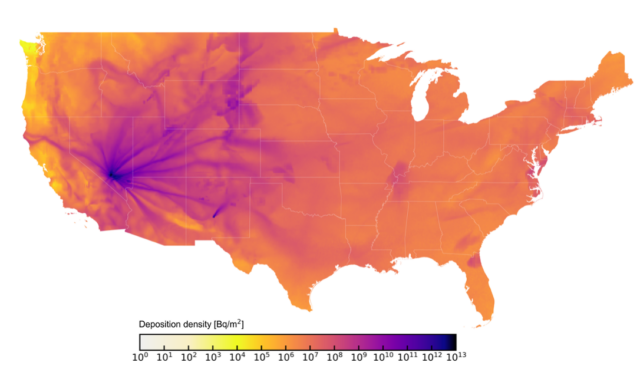
January 27, 1951 - Nuclear Bomb Testing in Nevada
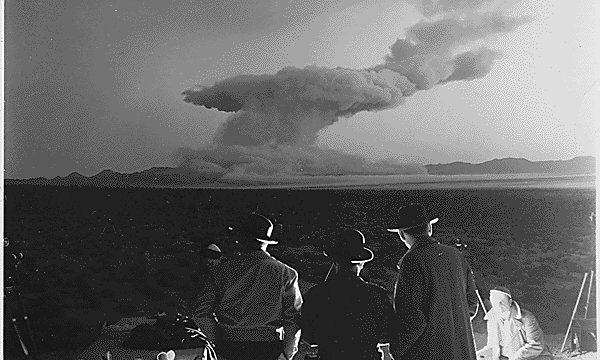
The United States begins testing at the Nevada Test Site, which will continue until 1992. During this period, the United States tests 928 nuclear weapons: 100 above ground and 828 underground. Learn more about the radiation spread from those tests here.
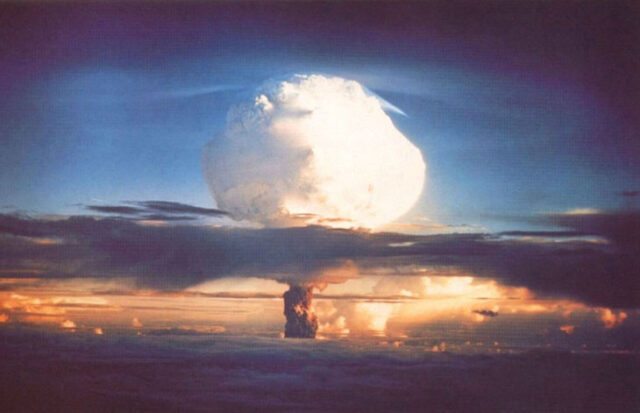
November 1, 1952 - Hydrogen Bomb Test
The United States tests the first hydrogen bomb, a larger-yield nuclear device using both fission and fusion, in the Marshall Islands at Enewetak Atoll. Read more about testing at Enewetak Atoll here.
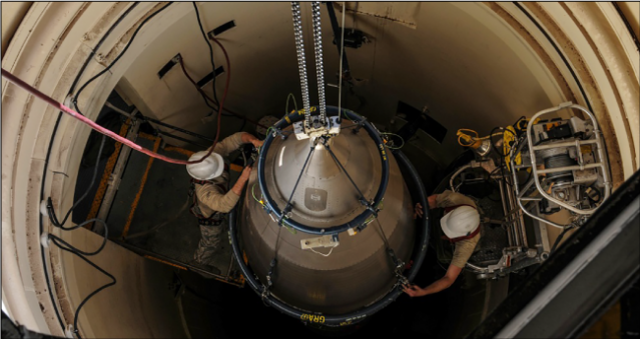
October 31, 1959 - ICBMs
The first Intercontinental Ballistic Missiles (ICBMs) are deployed operationally in the United States. Read more about ICBMs here.
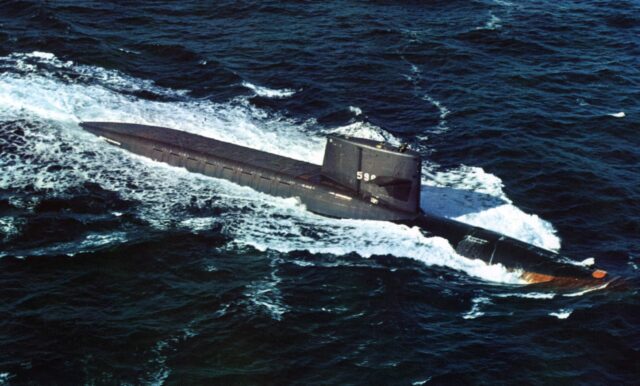
December 1959 - Nuclear-Armed Submarines
The United States deploys its first ballistic missile submarine, the USS George Washington.
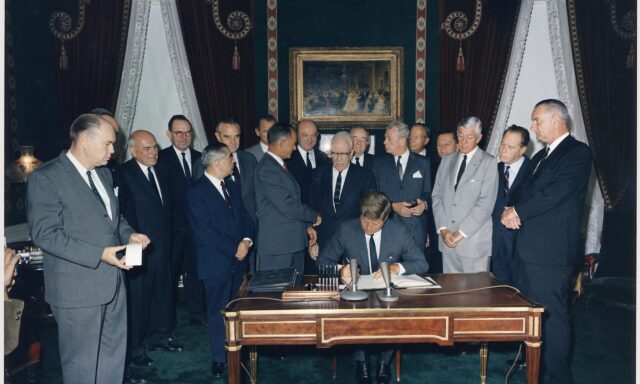
August 5, 1963 -
Partial Test Ban Treaty
Largely in response to growing concerns and protests from the general public, the United States, the United Kingdom, and the USSR sign a treaty banning above ground, underwater, or space nuclear tests. Underground testing is still permissible. Subsequently, 123 additional countries will join the treaty.
1992 - Nuclear Testing Moratorium
The US Congress passes and President George H. W. Bush enacts a temporary, voluntary nuclear testing moratorium that ends underground testing. The United States will continue to observe the moratorium up to the present day.
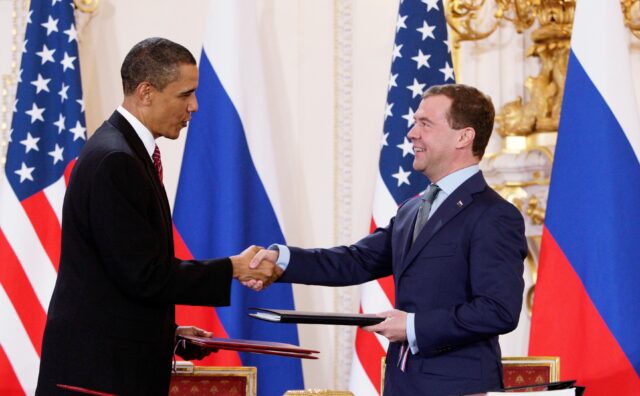
April 8, 2010 - New START and Nuclear Modernization
The United States and Russia sign a bilateral treaty limiting the number of each country’s nuclear warheads to 1,550 and allowing for monitoring and verification of each country’s nuclear activities. The same year the treaty enters into force, the US government begins a decades-long effort to “modernize” its entire nuclear arsenal, which includes building new nuclear weapons systems for land, sea, and air. New START is renewed in 2021 for five years. The treaty expires on February 5, 2026. As of May 2026, no follow on is negotiated between the US and Russia.